
What Pet Owners Should Know Before Scheduling a Veterinary Ultrasound

When a pet is sick, one of the hardest parts for owners is not knowing what’s wrong. A dog may stop eating, begin vomiting, act lethargic, or show subtle changes that are difficult to explain. Cats often hide illness even longer, making diagnosis even more challenging.
As veterinarians, we rely heavily on diagnostics because our patients cannot tell us where it hurts or describe what they are feeling. One of the most valuable diagnostic tools we use in veterinary medicine is ultrasound.
In our practice, veterinary ultrasound helps us evaluate internal organs in real time, identify abnormalities, guide treatment decisions, and sometimes even detect life-threatening conditions before they become emergencies.
Many pet owners are unfamiliar with what a veterinary ultrasound actually involves, when it is needed, or what it can and cannot diagnose. Understanding the process ahead of time helps reduce anxiety and allows owners to make more informed decisions about their pet’s care.
What Is a Veterinary Ultrasound?
A veterinary ultrasound is a non-invasive imaging tool that uses sound waves to create real-time images of your pet’s internal organs and tissues.

Unlike X-rays, which primarily show size and shape, ultrasound allows veterinarians to evaluate the internal structure and movement of organs. This makes ultrasound especially useful for examining:
- Liver
- Gallbladder
- Kidneys
- Bladder
- Intestinal tract
- Pancreas
- Spleen
- Lymph nodes
- Heart
Ultrasound is commonly used in both dogs and cats to investigate symptoms that cannot be fully explained through physical exams, blood work, or radiographs alone.
One of the major advantages of ultrasound is that it does not involve radiation, making it a safe diagnostic option for many patients.
Common Reasons a Veterinarian May Recommend an Ultrasound
In veterinary medicine, ultrasound is often recommended when basic diagnostics have not provided enough answers.
Some of the most common symptoms and conditions that may warrant a veterinary ultrasound include:
Chronic Vomiting or Diarrhea
Persistent gastrointestinal issues are one of the most common reasons pets are referred for abdominal ultrasound. Ultrasound can help identify:
- Intestinal inflammation
- Foreign material or blockages
- Thickened intestinal walls
- Pancreatitis
- Gallbladder disease
- Liver abnormalities
- Masses or tumors
Decreased Appetite and Weight Loss
If a pet is losing weight or refusing food, ultrasound can help determine whether the issue is related to the digestive system, liver, pancreas, kidneys, or another organ system.
Elevated Liver Values or Abnormal Blood Work
Sometimes pets appear normal at home, but blood tests reveal abnormalities. Ultrasound helps veterinarians investigate what may be causing those changes internally.
Urinary Problems
Straining to urinate, blood in the urine, urinary accidents, or recurrent urinary tract issues may indicate bladder stones, obstruction, kidney disease, or other abnormalities that ultrasound can detect.
Heart Murmurs or Arrhythmias
Cardiac ultrasound, also called an echocardiogram, allows veterinarians to evaluate heart valves, wall thickness, blood flow, and heart function in real time.
This is especially important for pets with:
- Heart murmurs
- Exercise intolerance
- Coughing
- Difficulty breathing
- Abnormal heart rhythms
Does My Pet Need Sedation for an Ultrasound?
One of the most common misconceptions pet owners have is that pets must be sedated for an ultrasound.
In reality, many veterinary ultrasounds can be performed without sedation.
Most pets tolerate the procedure very well, especially in a calm, low-stress environment. In many cases, patients simply lie comfortably while the sonographer performs the scan.
Sedation may occasionally be recommended for pets that:
- Are highly anxious
- Are painful
- Cannot remain still safely
- Require additional procedures
However, sedation is far less common than many owners expect.
Is Veterinary Ultrasound Painful?
Ultrasound itself is not painful.
The procedure involves placing a probe against the skin using ultrasound gel to help create clearer images. Pets may feel gentle pressure during the exam, but the scan itself is non-invasive and generally very well tolerated.
If a pet appears uncomfortable during the appointment, it is often because of the underlying medical condition rather than the ultrasound procedure itself.
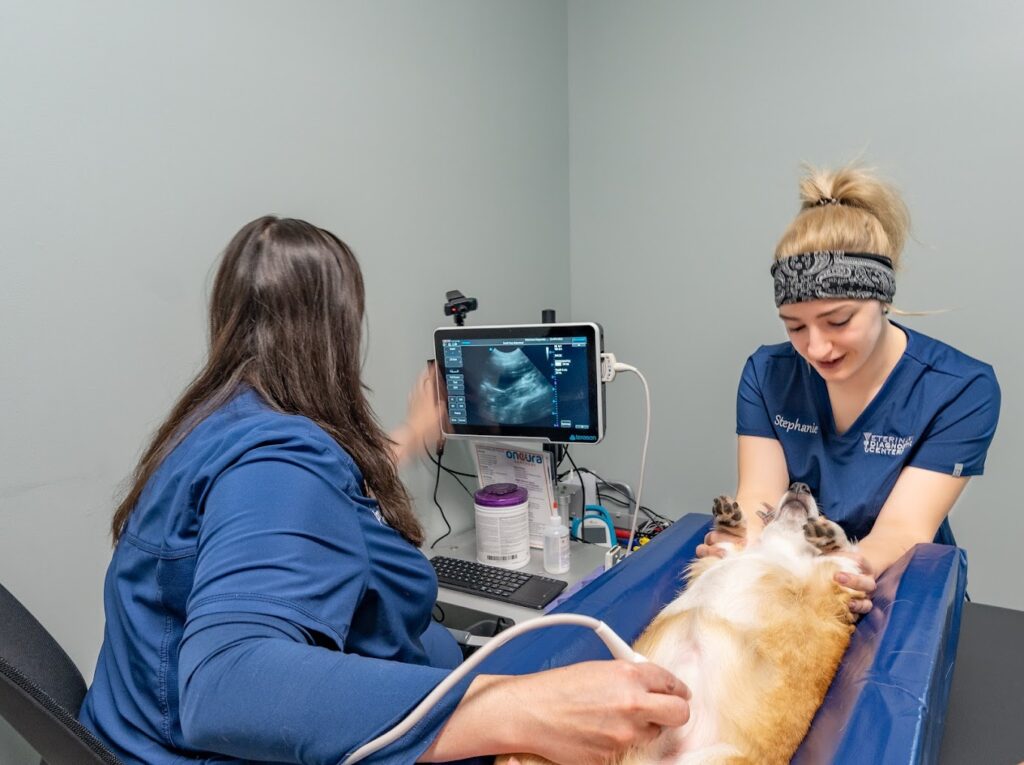
What Happens During a Veterinary Ultrasound Appointment?
While every case is different, most ultrasound appointments follow a similar process.
Step 1: Reviewing Medical History
The veterinarian or sonographer reviews:
- Symptoms
- Previous diagnostics
- Blood work
- X-rays
- Medical history
This information helps guide the ultrasound examination.
Step 2: Preparing the Patient
A small area of fur is often shaved to improve image quality. Ultrasound gel is then applied to the skin.
Step 3: Performing the Ultrasound
The sonographer systematically examines the organs and tissues in real time.
Unlike some imaging methods, ultrasound is highly operator-dependent. This means the experience and skill of the person performing the scan matter significantly.
An experienced veterinary sonographer knows how to:
- Identify subtle abnormalities
- Adjust imaging angles in real time
- Focus on high-risk structures
- Recognize patterns associated with disease
Step 4: Interpreting Findings
After the scan, the veterinarian discusses findings and next steps.
Sometimes ultrasound provides a clear diagnosis immediately. Other times, it helps narrow down possibilities or identify areas requiring additional testing.
What Ultrasound Can — And Cannot — Tell You
Ultrasound is an extremely valuable diagnostic tool, but it is important for pet owners to understand its limitations.
Many owners expect ultrasound to provide a final diagnosis for every condition. Medicine is rarely that straightforward.
In some cases, ultrasound helps us:
- Confirm disease
- Rule out major concerns
- Detect masses or tumors
- Identify inflammation
- Find internal bleeding or fluid
- Locate obstructions
However, ultrasound cannot always determine:
- Whether a tumor is cancerous
- The exact type of disease present
- The full severity of microscopic disease
For example, a veterinarian may identify a mass on ultrasound but still recommend:
- Fine needle aspiration
- Cytology
- Biopsy
- Additional blood work
- CT scan
- Follow-up imaging
Ultrasound is often part of the diagnostic process rather than the final answer by itself.
Why Experience Matters in Veterinary Ultrasound
One of the most important things pet owners should understand is that ultrasound is highly operator-dependent.
Unlike automated imaging systems, ultrasound requires real-time decision-making and technical skill.
An experienced veterinary sonographer knows how to:
- Track difficult intestinal structures
- Recognize subtle abnormalities
- Identify early disease changes
- Obtain diagnostic-quality images
- Adjust techniques based on the patient
This is especially important because factors like gas in the intestines, body size, movement, and anatomy can make ultrasound more challenging.
High-quality equipment matters, but the expertise of the person performing the scan is equally critical.
When Ultrasound Finds Something Unexpected
One of the most valuable aspects of ultrasound is its ability to detect problems that were not originally suspected.
In veterinary diagnostics, we frequently identify:
- Tumors
- Gallbladder disease
- Bladder stones
- Enlarged organs
- Fluid accumulation
- Hidden intestinal disease
Sometimes pets come in for elevated liver values and we unexpectedly discover a splenic tumor or another unrelated issue that requires immediate attention.
Early detection can dramatically improve treatment options and outcomes.
Veterinary Ultrasound Helps Guide Better Treatment Decisions
Even when ultrasound does not provide a complete diagnosis, it still plays a major role in treatment planning.
Ruling out serious conditions can be just as important as identifying them.
Ultrasound helps veterinarians determine:
- Whether surgery is needed
- Whether disease appears localized or widespread
- Which organs are involved
- Whether additional testing is necessary
- How urgent treatment may be
In emergency situations, ultrasound can quickly identify life-threatening problems such as:
- Internal bleeding
- Ruptured organs
- Urinary obstruction
- Gastrointestinal perforation
These findings help veterinarians make faster and more informed medical decisions.
Frequently Asked Questions About Veterinary Ultrasound
— Does my pet need to fast before an ultrasound?
In many cases, yes. Fasting helps improve image quality, especially for abdominal ultrasounds. Your veterinarian will provide specific instructions before the appointment.
— How long does a veterinary ultrasound take?
Most ultrasounds take between 30 minutes and one hour depending on the complexity of the case.
— Will my pet need sedation for an ultrasound?
Most pets do not require sedation. However, sedation may occasionally be recommended for anxious, painful, or highly active patients.
— Can ultrasound detect cancer in dogs and cats?
Ultrasound can identify masses and abnormalities that may indicate cancer, but additional testing such as biopsy or cytology is often needed to confirm whether a tumor is malignant.
— Is ultrasound better than X-rays?
Ultrasound and X-rays serve different purposes. X-rays are excellent for evaluating bones and overall organ size, while ultrasound provides more detailed information about soft tissues and organ structure.
— What symptoms indicate my pet may need an ultrasound?
Common symptoms include:
- Vomiting
- Diarrhea
- Weight loss
- Loss of appetite
- Elevated liver values
- Urinary problems
- Heart murmurs
- Abdominal pain
— Can ultrasound detect intestinal blockages?
Yes. Ultrasound is commonly used to identify foreign material, intestinal obstruction, and gastrointestinal abnormalities.
— Is veterinary ultrasound safe?
Yes. Ultrasound is considered very safe because it uses sound waves rather than radiation.
— What happens if the ultrasound does not provide a clear diagnosis?
Additional diagnostics such as blood work, biopsy, fine needle aspiration, CT scan, or repeat imaging may be recommended depending on the findings.
— How often should ultrasounds be repeated?
Repeat ultrasounds may be recommended to monitor:
- Heart disease
- Tumor growth
- Gallbladder disease
- Chronic conditions
- Response to treatment